Leo Grillo locates lost pets in Los Angeles. He cares for animals, thousands of them. Today, his organization, D.E.L.T.A Rescue (Dedication and Everlasting Love to Animals), is the world’s largest animal rescue shelter.
A mid-90s visit to Los Alamos National Laboratory in New Mexico. Everyone knows this one of the places where the government developed the first atom bomb during World War II. But our host was interested in Chaos Theory, an elaborate mathematical description of turbulent systems like the weather, and possibly the stock market, and who knows what all else. Chaos Theory was all the rage in Los Alamos then. Along with the theory, it turned out there was also real chaos in Los Alamos. It was slinking up and down the streets late at night in the form of a feral dog. Produced for the radio series SoundPrint.
Our host recalls how the Beatles changed everything, and John lead the charge; an audio essay, sprinked with live performances and 1963-64 Fan-Flub flexi-disk Christmas messages.
Lennon’s life, in own words, from his hundreds of interviews. Accompanied by music, outtakes, antics and poetics — singing, talking, and testifying about peace, family, and art.
Produced at KGLT-Bozeman with mix help from Colter Langan. Archive recordings are courtesy of Yoko Ono, the BBC, the CBC, Chicago’s Museum Of Broadcast Communications, Group W Productions, Rolling Stone Magazine, Apple, Capital, EMI, and Polydor Records.
WONSAPONATIME there was two Ballons called Jock and Yono. They were strictly in love-bound to happen in a million years. They were together man. Unfortunatimetable they both seemed to have previous experience — which kept calling them one way oranother (you know howitis). But they battled on against overwhelming oddites, includo some of there beast friends. Being in love they cloong even more together man — but some of the poisonessmonster of outrated buslodedshithrowers did stick slightly and tey occaasionaly had to resort to the drycleaners. Luckily this did not kill them and they werent banned from the olympic games. They lived hopefully every after, and who could blame them… —Lennon, Skywriting By Word of Mouth
Members of the generation jolted by Lennon’s death recall how they heard the news and how deeply this ex-Beatle’s life affected theirs (where were you when you heard?)
Voices: Scott MacNichol, Daniel Callis, Martin Goldsmith, Jane Blume, Mark Weber, Jim Palmer, John Scariano, Bonnie Renfro, Mary Oishi, Rob Raucci, and Emily Zambello. Produced at Cedar Creek Studios and KUNM-Albuquerque. PRX has a half-hour version of “The Day John Lennon Died.”
Miles has the wrong body. He was born a woman, Megan. After 15 years of serious depression and confusion about his place in the world, at age 28, he decided to make a change. He chose the name Miles and began his slow, difficult transition into manhood. All along the way, he carried an audio recorder with him. This is his story. Produced for Transom (available at PRX); edited by Jay Allison.
For most of his high school career, Louis robbed people: for money, and for thrills. He never got caught. Then, in his senior year, he decided to stop. Louis talks to friends and family, and to himself, about why he was a criminal, and why he needs to change. Produced for Transom (also at PRX) and the 826NYC writing center.
Public Historian Joey Plaster spent a year gathering 70+ interviews from people experiencing Polk Street’s transition from a working class queer neighborhood to an upscale entertainment district. Polk Street’s scene predates the modern gay rights movement. It was a world unto itself, ten blocks of low rent hotels, bars and liquor stores, all sandwiched in between the gritty Tenderloin, City Hall, and the ritzy Nob Hill: a home invented by people who had no other home.
For decades, the street had been a national destination for queer youth and transgender women, many of them fleeing abusive or unwelcoming homes. But by the mid-1990s, the last of the working class bars that formed the backbone of the Polk community were being replaced by a new bloc of mid-income businesses and residents.
Long-term Polk residents were incredibly emotional about these changes. Many considered the neighborhood to be their first real home. Now they saw their family’s gathering places evaporating. The conflict was sometimes dramatic: owners of one gay bar claimed that the new business association forced them off the street. A gay activist group made national news when they plastered the street with “wanted” posters featuring a photo of the new association’s president.
These intense reactions suggested a rich history, but I found that it had not been recorded. I feared it would be lost with the scene. I had prior experience as an oral historian. This was my first effort to find overlap with radio, which I’ve long felt is the best medium for broadcasting intimate, personal stories from “marginal” populations. —Joey Plaster
Pasquale Spensieri spends his days driving around Brooklyn looking for dull blades. When he rings the bell on his truck, the owners of upholstery shops, restaurants and pizza parlors come out with knives and scissors to sharpen. Pasquale’s father first started sharpening knives during the Depression, with a pedal-operated grinding machine strapped to his back. At that time, there were hundreds of door-to-door grinders in New York. Today, at the age of 71, Pasquale is one of the last. Produced by Joe Richman and Emily Botein (WNYC) for their series New York Works.
“Walking High Steel” (12:15) Jamie York and the Kitchen Sisters
Since the 1880s, Mohawk Indian ironworkers have been known for their ability to work high steel. From the Empire State Building to the the World Trade Center, generations of Mohawks have helped shape New York City’s skyline. Each week, they commute to Manhattan from their reservation in Canada, framing the city’s skyscrapers and bridges. In September 2001, after the fall of the Trade Center Towers, the sons and nephews of these men returned to the site to dismantle what their elders had helped to build.
“Crow Fair II: A Portrait in Sound” (52:00) Steve Rathe
This is the final hour of a two-hour special on the annual Crow Fair in southeastern Montana, recorded in 1977 by NPR. For all the info, see part one: HV096- Crow Fair I.
“Crow Fair: A Portrait in Sound” (52:00) Steve Rathe
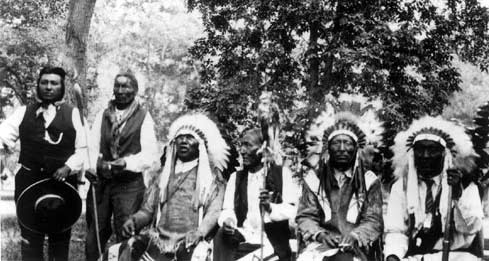
A century ago the six Crow Reservation Districts came together for a cultural gathering with other Great Plains tribes. Every third weekend of August the Crow Fair honors that tradition in a “giant family reunion under the Big Sky.” Five days of celebration in southeastern Montana, with a parade, Pow Wow, rodeo, and traditional and fancy dancing.
In 1977 a team of NPR producers and recordists spent a week collecting sounds and interviewing people at this annual event. This early ambient sound-portrait breathes with the arts and activities of the Crow people: the Apsaalooke Nation.
Voices from all sides of adoption. Stories about living with questions and searching for answers. We hear from birth families (mothers, siblings and a father), adoptees (both kids and adults), and various adoptive families including open adoption and international adoption (China).
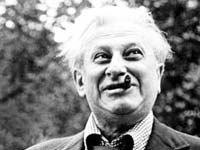
For many years, Transom.org editor, Sydney Lewis, worked side by side with Studs on his radio show and his books. For this remembrance, a blend of documentary and reminiscence, she brings together a crew of Stud’s co-workers. They share great stories and wonderful previously-unheard tape of Studs himself. Sydney Lewis co-authored Studs’ book Touch and Go: A Memoir.
Biking & Mic-ing the Lewis & Clark Trail; part 2 (of 2), from the Rocky Mountains to the Pacific Ocean:
“Lewis & Clark: Down the Columbia” (2003 / 23:00) Barrett Golding
Chief Mountain Hotshots, Nicole Meeso and Aldon Wells, Powell Campground ID — Getting ready for a day’s work in the Clearwater Forest with the Blackfeet wildland firefighters, known as some of the best in the world.
Sister Carol Ann and the Bendictine Sisters, St. Gertrude Monastery, Cottonwood ID — Land stewardship is a matter of faith in these sisters’ rural Catholic perspective. We walk thru the woods of the monastery; 800 acres which the sisters have had to learn how to manage.
Lois & Betty, Patterson Restaurant, Patterson WA — Sipping coffee and surveying farm life from the breakfast tables of a small town cafe.
Louis Butler and family, Walla Walla River WA — Four Generations Fishing: A retiree from Hanford Nuclear Reservation goes catfishing with his daughter, grand-daughter and great-grandsons.
Ken Karzmiski, Archeologist, Columbia Gorge Discovery Center, The Dalles WA — Looking for lost Lewis & Clark legacy, and the artifacts and languages of native cultures drowned by the Columbia River dams.
USCG Duty Surfman Kyle Betts, now Chief Boatswain’s Mate and Executive Petty Officer, Cape Disappointment U.S. Coast Guard Station WA — The USCG Search and Rescue team pulls boats and people out of treacherous West coast waters along the Columbia River bar, where the river meets the ocean: “the graveyard of the Pacific.”
“On the Trail of Lewis & Clark” (1994 / 27:00) Larry Massett
An earlier pedal over the same route, from the Rocky Mountains, down the Columbia River to the Pacific Ocean, interviewing whoever crosses our path: wind surfers, church organists, forest service employees, and “we’ve been talking to as many loggers as we can, to try and find out if they don’t see bicyclists, or they just hate us.”
The first movement in From the Journals of Lewis and Clark, a symphonic work for orchestra and choir based on the expedition’s journals. Montana’s Great Falls Symphony commissioned University of Idaho music professor Dan Bukvitch as the composer. The text is President Jeffersons’s instructions to Captain Lewis in 1803.
Biking & Mic-ing the Modern Lewis & Clark Trail; part one of two, up the Missouri River into the Rocky Mountains. Barrett Golding and Josef Verbanac, a radio producer and an English professor, a Jew and a Souix, bicycle from Missouri to Montana, enduring floods, war, worms, mud, and myriad Lewis & Clark festivals:
Prep: Cross-country preparations, then and now, from Penis syringes and Indian presents, to AAA and GPS. “Your observations are to be taken with great pains and accuracy, for others as well as yourself” –Jefferson’s Instructions to Lewis, 1803.
Flood: Missouri floodwaterss, a frog symphony, a million worms, bowfishing a beanfield, and in Marthasville MI little league it’s Lemke Trenching and Excavating vs. Miller Funeral Homes. Don Sherman, a retired Chrysler worker, who now volunteers his time taking care of the city park in the flood-prone landmark rural town — which, in Lewis & Clark’s time, was the last outpost of white society. And we go bow-fishing for in a bean field.
Rendezvous: Biking and mic-ing the Missouri River. Captain Lewis’ Aria, surveyor-stalking cougars, black powder bursts, cave wall Manitous, and Edens lost. Explorers express emotions and the Expedition breaks into song, in “Corps of Discovery: An Opera in Three Acts” produced by music professor Eric Dillner and the University of Missouri’s Show-Me Opera. Geographer James Harlan maps the Two Missouris, the Missouri Territory now and two centuries ago, using an 1815 Land Office survey and Clark’s field-notes. James Denny, Historic Interpreter, for Missouri’s Department of Natural Resources, points out where pictografs on a cliff were a landmark of the Lower Missouri, until the railroad blew ’em up; we tour through the tunnel of the ex-Manitous.
Wars: No Home on the Range, Chief Joseph’s Race Track, and Brothers Buddha and Brahma. Farrell Adkins, Campground Host at Arrow Rock MO sings the little known second verse of “Home on the Range.” Matt Nowak, Natural Resources Director at Fort Leavenworth Army Base KA describes this places part in the death and desctrution of the Nez Perce people.
Indian County: Daily pow-wows, casino economies, and Lewis’ birthday gloom. Neil Phillips, Penobscot tribal member and former canoe racer paddles from Maine to Montana, experiencing life on the river, a little-seen view of America. Joe Verbancec Sr. tours us thru the Standing Rock reservation.
The Strenuous Life: Bruce Kaye, Chief Naturalist at Theodore Roosevelt National Park recounts Teddy Roosevelt’s time in North Dakota. His ideas about conservation developed in the badlands, then get expressed in the acts of the President of the United States and the start of the National Park system.
Re-enaction: At Coal Banks Landing, on Missouri River “Breaks” in Montana, we encounters the re-reactors, traveling up-river using the boats, clothes, food, guns and knifes of the Lewis & Clark era.
Camp: Lewis and Clark made 600 campsites on their expedition from St. Louis to the Pacific and back. So far, the exact location of only one has been identified. For 13 years, archaeologist Ken Karsmizki has been digging at Lower Portage camp of the Great Falls, on the Missouri River in Central Montana, and finding fire pits, butchered bones, wooden stakes and other artifacts, all dating to Lewis and Clark’s time.
Orchestration: “From the Journals of Lewis and Clark” is a symphonic work for orchestra and choir based on the expedition’s journals. Montana’s Great Falls Symphony commissioned University of Idaho music professor Daniel Bukvich as the composer, whose job was to make Art imitate History.
Offbeat retreats and obscure tours thru the heart of Americana:
“Losing It at Universal Studios” (4:37) Mark Allen
Temporarily insanity during a tour of Universal Studios in southern California. So many cool things to see, to do, to tour. The writer is overwhelmed by the magnificence of it all, and pretty much loses his mind. Based an Mark Allen’s web essay “I Suffered Stendhal Syndrome At Universal Studios Hollywood!.”
Boonville is a small community in Northwest California, founded in 1862, a few hundred feet in elevation, with few hundred residents. And… the town has it’s own language, Boontling. We go sharkin’ and harpin’ thru Boonville with Charles C. Adams, author of Boontling: An American Lingo.
“David Lynch goes into clean neighborhoods and finds the germs and bugs beneath; I go into dirty neighborhoods and find the life.” That’s how filmmaker Tony Buba describes his twelve documentaries about his hometown of Braddock, Pennsylvania. Buba is the son of Italian immigrants, part of the wave of Europeans who came to America in the late nineteenth and early twentieth centuries to work in the steel mills of Braddock and other towns around Pittsburgh. Now the steel industry is almost dead, and Braddock is the prototypical post-industrial “‘rust belt” town, a town where a person either lives by his or her wits or lives in poverty. Buba tours through the streets of Braddock, past the old Croatian and Slovak social clubs and through streets, now empty, that once bristled with activity.
From LHP’s series of radio works: Place Portraits. Music: “The Very Thought Of You,” instrumental version by Eddie Lockjaw Davis off the 2006 compilation Jazz For Lovers, and Elvis Costello singing on Marian McPartland’s 2006 Piano Jazz: McPartland/Costello.
Bruce Davidson has been a member of the U.S. Equestrian Team since 1971. He’s a world class rider, trainer and breeder. NPR visited Chesterlands Farm, in Unionville, Pennsylvania, when Bruce Davidson and his horse JJ Babu were training for the 1984 L.A. Olympics (they won a Team Gold). David Molpus is now with Ideastream in Cleveland. The producer Carolyn Chadwick’s latest project is Conservation Sound.
Summer Bird, Rags to Riches, Empire Maker, Lemon Drop Kid, Colonial Affair, Thunder Gulch, those are some of the winners at the Belmont Stakes, the last leg of the Triple Crown of Thoroughbred Racing. In 1979, an army of NPR sound-recordists showed up trackside at Belmont Park, Long Island to document Spectacular Bid’s attempt to match Secretariat’s legend. Writer/Produced: Josh Darsa. Technical Director: Skip Pizzi, with Field Engineers: Paul Blackmore and Ceil Muller. Technical Assistance: John Widoff and Dave Glasser. Editorial Assistance: Neal Conan.
Surveying the sonic spectrum of musicians warming up for a performance. We hear old-time singer Abigail Washburn, concert pianist Lang Lang, Brazilian singer Flora Purim, mezzo-soprano Cecilia Bartoli, Tuvan rocker Albert Kuvezin, singer songwriters Gillian Welch and Dar Williams, bel canto tenor Lawrence Brownlee, and cellist Yo-Yo Ma. Montage by David Schulman
One of the world’s great operatic singers explores what it means to approach the human voice as an instrument — like a trumpet or violin, produced by David Schulman.
“Negativland: Interview” (14:35) John Rieger
The cutup artists, Negativland, chew up and spit out the media, turning their NPR interview into audio art; accompanied with excerpts from their 1987 Escape from Noise.
Hearing Voices from NPR®
088 Scene of the Crime: Victims, Cops, and Criminals
Host: Jake Warga of Hearing Voices
Airs week of: 2011-04-13 (Originally: 2010-03-31)
“Weegee interview” (3:04 excerpt) Mary Margaret McBride
An archival interview with 1950s NYC crime scene photographer, Arthur Fellig (1899-1968), aka, Weegee. SoundPortraits has more of this July 1945 interview by nationally-syndicated talk show host Mary Margaret McBride (WEAF-New York City). (Music: “Angel of Solitude” by Alias.)
Casey (no first name ever revealed) was crime photographer for the fictional Morning Express newspaper. He and reporter Ann Williams snapped shots, tracked criminals, and solved crimes. This excerpt from episode 330 (of a total 431) of the popular half-hour mystery-adventure series aired 1950-03-02.
A short clip from the third episode (1948-10-10) of this NBC show, starring Van Heflin with a script by Milton Geiger based on the stories of Raymond Chandler.
The This American Life producer spends a couple days riding around L.A. with the professional “Crime Scene Cleaners, specializing in homocides, suicides, and accidental deaths.”
Hearing Voices from NPR®
087 Thumb and Thumber: The Joy of Hitchhiking
Host: Larry Massett of Hearing Voices
Airs week of: 2011-04-06 (Originally: 2010-03-24)
Hitchhiking was once common, These days it’s aquired an aura of danger and desperation. Who wants to take the risk — especially after all those gruesome stories about rapists and serial killers? But occasionally you can still spot some guy stranded on the side of a road, sign out, thumb up, hoping that your car will be his salvation. Is he dangerous? Insane? Or just plain dirty? Maybe we should stop and find out. (PRX)
Hitchhiking cross-country with a telegram for the Dalai Llama, a prayer for compassion from the cops, and half your net worth invested in a pair of high-top sneakers.
The first all-girl radio station in the nation, WHER-Memphis, went on-air in 1955. It was the brainchild of sound legend Sam Phillips, who created the groundbreaking format with money he raised from selling Elvis Presley’s Sun Studios contract. Women almost exclusively ran the station. They read the news, interviewed local celebrities, and spun popular records. They sold and produced commercials, directed and engineered programming, and sat at the station’s control boards.
NPR’s Susan Stamberg hosts this one hour special on WHER, produced for the Kitchen Sisters’ series Lost and Found Sound. Mixed by Jim McKee of Earwax.
Hearing Voices from NPR®
085 Protest: At the National Mall & Town Halls
Host: Barrett Golding of Hearing Voices
Airs week of: 2011-03-23 (Originally: 2010-02-24)
Protest may be new to some parts of the world, but in America, complaining about the government is a national pastime. We hear protest music and mashups; we go to protest marches, from Vietnam War era actions on the National Mall, to modern-day Tea Parties and Town Halls:
“Town Halls 2009” (2:05) Barrett Golding
Protest used to be mainly for the young and left-leaning, but recently older right-wingers have joined the party — the Tea Party. When Congressmen went home in 2009, this is what they heard from constituents. Music: Jeff Arntsen, mix: Robin Wise, audio: excerpted from YouTube videos.
The popular Burmese rock band Iron Cross is using music to challenge the nation’s infamously repressive regime. In the great tradition of rock and roll, Iron Cross is taking on Burma’s military government with song.
Hearing Voices from NPR®
084 Place Your Bets: What Happens in Vegas
Host: Alex Chadwick of Conservation Sound
Airs week of: 2011-01-26 (Originally: 2010-02-17)
A classical composition, in three parts, for strings, winds, and an interview with Tom Martinet, who trained to be a priest, but, instead, started working Nevada dice tables. Premiered 1997 in Vegas, performed by Sierra Wind Quintet. Re-released on PKB’s 2006 Larkin Gifford’s Harmonica.
“Poker at the Ox” (9:54) Alex Chadwick
An NPR hosts pits his wits against the regulars at a downtown small-town casino. Guess who wins. Produced by Carolyn Jensen; sound engineer by Michael Schweppe.
“Old Gambler” (7:07) Joe Frank
An excerpt from Joe’s hour “Zen” in his series The Other Side. What happened in Vegas… definitely didn’t stay in Vegas. Getting on the wrong side of Sin City’s collection crew.
“Bass Keno” (8:18)
Jazz bassist Kelly Roberti (David Murray Quintet) lost his bass to the keno machines. He kicked the habit; the scars remain, but the bass is back. Kelly was a 2010 Governor’s Arts Awards winner.
“Lock It Up” (5:56) John Ridley
A radio drama written for Ridley’s 2001 LA Series on NPR Morning Edition. Performers are Bob Wisdom, Yang Chee, and Jim Wallace (script).
Above photo of the Las Vegas sign by Kcferret, June 2005.
The final hour in our three hour-long retrospective of this first decade of the century, and the millennium:
Shortcut Thru the 21st Century, Part Three (52:00) Peter Bochan
We survey selected speech, song, and soundbites of the stories and celebs from 2006 thru 2009: Christ’s passion, planetary climate change, presidential contenders, Ponzi schemes, collapsing economies, Tiger, Michael, Sully, Britney, Bush, Obama, foreclosure, bailout, Bradgelina, Miss USA, You Tube, and the continuing decline of western civilization.
Shortcuts are assembled, mixed and mashed by audio wizard Peter Bochan, of All Mixed Up, WBAI-NYC and WPKN-Bridgeport CT. (All three 21C Shortcuts hours are at PRX.)

 Hearing Voices from NPR®


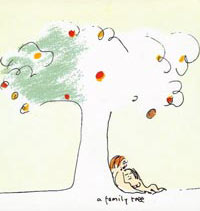 WONSAPONATIME there was two Ballons called Jock and Yono. They were strictly in love-bound to happen in a million years. They were together man. Unfortunatimetable they both seemed to have previous experience — which kept calling them one way oranother (you know howitis). But they battled on against overwhelming oddites, includo some of there beast friends. Being in love they cloong even more together man — but some of the poisonessmonster of outrated buslodedshithrowers did stick slightly and tey occaasionaly had to resort to the drycleaners. Luckily this did not kill them and they werent banned from the olympic games. They lived hopefully every after, and who could blame them…





 .
.