2012-12-02
Jazz Bass- Kelly Roberti
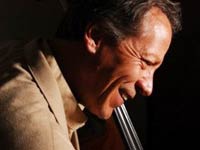 Jazz Bass- Kelly Roberti (1:21 mp3):
“The first time I heard Charley Parker I thought heard Be-Bop, like Charlie Parker with Miles Davis, it killed me. It was like: What is this chemical stuff?”
Independent Audio Producer since 1983. Works have been broadcast by NPR, PRI, BBC, CBC, VOA and CBS on All Things Considered, (the Peabody Award winning) Lost & Found Sound ("Natural Radio" and "Voices from the Dust Bowl"), CBS Radio’s The Osgood Files (hosted by Charles Osgood), NPR The DNA Files w/ John Hockenberry (duPont-Columbia Silver Baton winner), Morning Edition, Marketplace, Weekend America, SoundPrint, New American Radio, Performance Today, Beyond Computers, Living on Earth, High Plains News Service, Outfront, and This American Life.
Jazz Bass- Kelly Roberti (1:21 mp3):
“The first time I heard Charley Parker I thought heard Be-Bop, like Charlie Parker with Miles Davis, it killed me. It was like: What is this chemical stuff?”
 Hearing Voices from NPR®
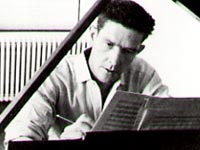
140 John Cage: September 5 1912 – August 12 1992
Host: Barrett Golding of Hearing Voices
Airs week of: 2012-08-29
“John Cage” (52:00 mp3):
A tribute to the composer on his 100th birthday:
From a half-hour radio play, commissioned by CBS, written by poet Kenneth Patchen and scored by Cage. Broadcast May 31, 1942 on WBBM radio station (Columbia Broadcasting System in Chicago), as part of their Columbia Workshop series. Performance by Xenia Cage, Cilia Amidon, Stuart Lloyd, Ruth Hartman, Claire Oppenheim and John Cage conducting.
A voxpop variety of folk answer the musical question: “Who’s John Cage?”
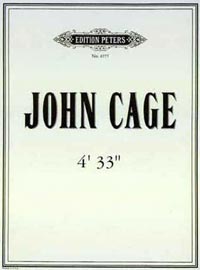
Few contemporary composers had the influence of John Cage. From experimental music to minimalism, Brian Eno to George Winston, echoes of John Cage continue to resound to this day, more than 6 decades after his “Sonatas and Interludes for Prepared Piano” were first published. John Cage was a conceptualist of sound who turned even silence into music as he did with his famous piece, 4 minutes and 33 seconds. John cage died from a stroke in August of 1992. But we hear his thoughts in sound from a 1987 interview. From the series Echoes with John Diliberto, part of their Thoughts in Sound specials.
Pianist Stephen Drury performs a 1948 Cage composition; the title track of the album In a Landscape
From the collection A Chance Operation: The John Cage Tribute (this UbuWeb link has free downloads of the entire CD set).
An impressionistic illustration of synchronistic artistic cooperation, in the words of Cage and choreographer Merce Cunningham. Interviews by Katie Davis, from Jay Allison’s series Living in the Arts.
 Hearing Voices from NPR®
134 Close to Death: At Life’s End
Host: Barrett Golding of Hearing Voices
Airs week of: 2012-03-21
“Close to Death” (52:00 mp3):
People near the process of death and dying:
It takes four seconds to hit the water from the Golden Gate Bridge. A year ago the producer’s friend Phil took that fatal jump. They met several years before that when Phil’s brother committed suicide (transcript).
Herman Porter, a blind man, slipped unseen beneath a moving subway train: 90 tons of steel and electricity. (Hear Alex Chadwick’s eulogize for NPR’s pioneering producer: “Josh Darsa Obituary“.)
Writer Carmen Delzell visit her grandmother, who broke her hip — not uncommon, says the doctor, for an 89-year-old.
Scott Carrier talks to the family, the ex-husband, the mortuary, the doctors, even the grave digger, in piecing together the memory of a life. Prodcued for New American Radio. (Scott’s most recent book is Prisoner of Zion.)
Messages on my the producer’s mother’s tape machine, found after his father’s death; original music by Skyward

 Hearing Voices from NPR®
131 Voices from Tahrir: Portrait of a Revolution
Host: Heba Morayef of Human Rights Watch
Airs week of: 2012-01-25
“Voices from Tahrir” (52:00 mp3):
Bread, Freedom, and Human Dignity:
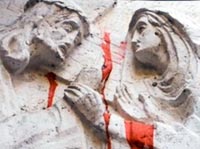
January 25, 2011. One year ago, a revolution began in Cairo’s Tahrir Square. For the next eighteen days, millions of Egyptians across the country would demonstrate in the streets, demanding the end of their 30-year dictatorship. They were inspired by Tunisians, whose protests, that same month, had forced out the authoritarian regime of President Zine El Abidine Ben Ali. Now it was time for Egyptian President Hosni Mubarak to go.
A few weeks after the protests, the advocacy group Human Rights Watch interviewed some of the organizers of the January uprising: union leaders, civil rights workers, young social media activists, family members of of murdered protestors, and mothers who brought their kids to Tahrir to clean after the protests.. These Human Rights Watch interviews provide a rare, eyewitness account of a revolution, told by the Egyptian people, the activists, human rights defenders, and bloggers who persevered during those eighteen days.
The hour features recordings made in the square by reporters and citizen jounalists from around the world, including Daniel Finnan of Radio France Internationale, Al Jazeera, Egypt Daily News, Ramy Roof, and Matthew Cassel of Just Image.org.
Music: “Erhal (Leave)” and “Laugh, Revolution” by Ramy Essam; “Ezzay? (Why?)” by Mohamed Mounir and “Gomaa Hayran (Uncertain Friday)” by Joseph & James Tawadros
from the collection Our Dreams Are Our Weapons – Soundtracks of the Revolutions in Tunisia and Egypt
 Hearing Voices from NPR®
129 HanukkahChristmashup: Season’s Greets and Beats
Host: Barrett Golding of Hearing Voices
Airs week of: 2011-12-21
“HanukkahChristmashup” (52:00 mp3):
Mixes and mashes and seasonal samples, and song stories:
NPR talks to troops in a U.S. military hospital at Bagram Air Base, outside of Kabul. Quil Lawrence interviewed Sergeant Wallace Trahan, Sergeant Aaron Kelly, Sergeant Zachary Scoskie, and Colonel Diane Huey. Mix: Jim Wildman. Music: W.G. Snuffy Walden “The First Noel” Windham Hill Holiday Guitar Collection
| The Colbert Report | Mon – Thurs 11:30pm / 10:30c | |||
| A Colbert Christmas: Feist Sings | ||||
|
||||
From the Apollo 8 capsule, December 24, 1968.
 Hearing Voices from NPR®
124 Walk in the Park: National Parks, Neighborhood Parks
Host: Barrett Golding of Hearing Voices
Airs week of: 2011-10-19
“Walk in the Park” (52:00 mp3):
Yellowstone, Zion, the Everglades, and William Pierce Park in DC:
From the series Neighborhood Stories– Park Life, profiling the daily life of a community’s urban oasis: “Country Bobby” Lowry is the guardian of Walter Pierce Community Park in Washington, D.C. He’s been keeping an eye on the park for almost three decades, and knows more about how it than any city official — he knows the trees, the plants and the kids. In the first of four stories about the park, we meet this transplanted farm boy who never takes shortcuts in his work. See NPR’s has great photo gallery.
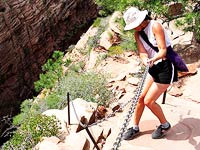
Utah’s Zion National Park draws 2.7 million visitors a year, and a major attraction for hearty hikers is a trek along the Grotto trailhead to Angel’s Landing. From the banks of the Virgin River, the yellow-and-red sandstone sides of Zion Canyon rise 2,000 feet. It feels like being inside a huge body. The canyon walls are the rib cage spread open and Angel’s Landing is like the heart.
Take an Angels Landing eHike. Photo gallery at NPR.
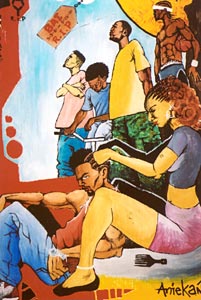 From Neighborhood Stories– Park Life: An ode to Leah at Walter Pierce Community Park, who braids hair by the basketball court while the guys play 5 on 5.
Music from Who Is Jill Scott? Words and Sounds, Vol. 1

 Hearing Voices from NPR®
121 Engine Overdrive: Ode to Internal Combustion
Host: Barrett Golding of Hearing Voices
Airs week of: 2011-08-24
“Engine Overdrive” (52:00 mp3):
Ride, rev, race, the society of over-sized cylinders:
A short symphony in pistons and rings, made from tractors recorded at the Reidsville, NC Antique Engine Show. All sounds are actual engines; the piece has no instruments or effects. Paul Overton is at: Dude Craft | Every Day is Awesome | PRX.
A pre-race prayer delivered at the Nascar Nationwide series race in Nashville TN July 23, 2011. Boogity Boogity Boogity Amen.
HV is crazy about the songs and sonics by the band Big Stick (aka,Drag Racing Underground). We start with a couple cuts from their CD Hot from the Strip! — “Drag Racing” is a re-issue of their 80s classic, and we hear excerpts from “Wildgirl‘s Rockin’ Racing,” a Saturday night WFMU radio show.
The ethanol-injected noise of cars, drivers, and fans at the annual Toyota Grand Prix of Long Beach, an ocean-side street race with top pro race-car drivers from around the globe. One-hundred-and-eighty thousand aficionados gather around a two mile course of Fast & Loud in downtown LB — 186mph avg, 200+ on the straightaways. Co-recorded by Joe Skyward.

 Hearing Voices from NPR®
118 Hiker/Biker: Self-Propelled Travels
Host: Barrett Golding of Hearing Voices
Airs week of: 2011-07-06
“Hiker/Biker” (52:00 mp3):
Travels of the self-propelled, bipedal and by pedal:
Part 1: A bike trip through Yellowstone and Teton National Parks, into windstorms, between snowbanks, and in the middle of a bison herd. Interviewees: Rick McAdam, Yellowstone Park Ranger; Geyser Gazers at Old Failthful; Kathy Urbigkit of Spin a Yarn, Dubois WY; Wolves in West Yellowstone MT.
Part 2: Finishing seven hundred miles of miking and mic-ing in Wyoming, riding north on the east side of Yellowstone,. encounting killers, hunters, special forces, and trips to Heaven. Interviewees: Dan Herring, Herring & Sons Taxidermy, Thermopolis WY; Special Forces members Buck Wilkerson (US Army retired) and David Owens (Tech Sergeant, US Air Force) at Honor Our Special Operations Forces Weekend, Memorial Day, Cody WY; Pastor William Hardrick, Kingdom of Heaven Embassy visiting his kids in Riverton WY (photo gallery).
The paving of America as seen from the shoulders and sidewalks of our country’s roads. Musings-in-motion recorded during a 5000 trek from Arizona to Georgia to Maine. “It is becoming illegal to travel this country by foot.” Music by Jeff Arntsen. (A longer version of this story is at Third Coast International Audio Festival.)
Bhutan is a land of prayer flags, Buddhism, and, like everywhere else: poverty, poor health, and domestic violence, Queen Ashi Sangay Choden Wangchuk believes her job is to increase the Gross National Happiness. To do that she treks into the most remote corners of the country, meeting people she’d otherwise never see, asking about their lives, helping them with health care issues, and working to end mistreatment of woman. Outer Voices accompanied her into an unmapped corner of the high Himalayas — they are the first foreign journalists invited to accompany a Bhutanese monarch on a trek, and to interview the Queen.

The Queen of Bhutan, Ashi Sangay Choden Wangchuck, with her people (photo: Jack Chance)
The Queen’s Trek (PRX) was produced by OV’s Stephanie Guyer-Stevens and Jack Chance, Guerilla Ethnomusicologist for The Mountain Music Project. Major Underwriting was provided by Terry Causey and the Shelly and Donald Rubin Foundation. Interviewees: Chimi Wangmo, Kunzang Choden, Yeshey Dorji and Queen Ashi Sangay Choden Wangchuk. Musical performances by Jigme Drukpa and the Khuju Luyang Ensemble.
Special thanks to Her Majesty Queen Ashi Sangay Choden Wangchuk, the staff and clients of RENEW Bhutan, Tshering Uden Penjor, Françoise Pommaret, Ariana Maki, the Royal Body Guard and the Royal Bhutan Army, the Zulikha Nunnery, Hotel Zhi Waling, and the people of Daifam, Zamtari, and Shinka Lauri villages.
RENEW = Respect Educate, Nurture and Empower Women, “an organization dedicated to the empowerment of vulnerable women of our society so that they can emerge as socially and economically independent members of their communities.”

 Hearing Voices from NPR®
117 War Torn: Weapons-grade Radio
Host: Barrett Golding of Hearing Voices
Airs week of: 2011-06-08
“War Torn” (52:00 mp3):
A weapons-grade hour of wartime radio. The people who start the fight, and the people who pay the price:
From the British prime minister’s speech to the House of Commons, June 4 1940, preceding the Battle of Britain:
We shall fight in France, we shall fight on the seas and oceans, we shall fight with growing confidence and growing strength in the air, we shall defend our island, whatever the cost may be, we shall fight on the beaches, we shall fight on the landing grounds, we shall fight in the fields and in the streets, we shall fight in the hills; we shall never surrender.
From the benefit CD Path To Zero – A Prayer Cycle
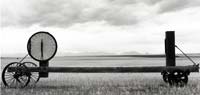
The recollections of Hiroshima survivor Kaz Suyeishi, rendered by two young Japanese woman, Kazuka and Kiyo. Alvin Huntsman performed the improvisational music by banging, scraping, and bowing several large sculptures by Gary Bates, including the “Wind Wagon,” a 35-foot multi-stringed banjo-like structure.
From The Poetry Of Carl Sandburg, an out-of-print Caedmon Audio collection. Background sounds: Mazen Kerbaj “Starry Night” (info below).
 Hearing Voices from NPR®
111 Guitar Heroes: Pickers, Pluckers, Players
Host: Barrett Golding of Hearing Voices
Airs week of: 2011-02-23
“Guitar Heroes” (52:00 mp3):
From the original big bad bluesman to a Master Class with classical guitarist Christopher Parkening:
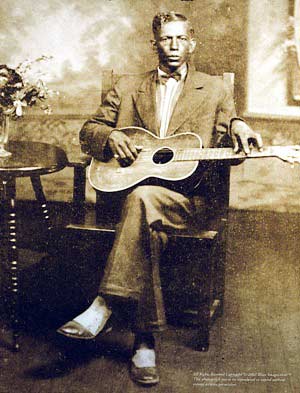
The legend is of a shadowy soul traveling the countryside as singer, preacher, outlaw, teacher, of a hard boozin’, brawlin’, womanizin’ Blues Man. Well, that man had a name: Charley Patton, born around 1890 in the heart of the delta.
We hear interviews with people who played with Patton, David “Honeyboy” Edwards, and archival tape from Booker Miller (interviewed By Gayle Dean Wardlow), Roebuck ‘Pops’ Staples, and Howlin’ Wolf. And we talk to musician Corey Harris and authors Jim O’Neal (Living Blues Magazine) and Francis Davis (History of the Blues: The Roots, the Music, the People: From Charley Patton to Robert Cray
 Hearing Voices from NPR®
108 Making Music: For a Living, For a Life
Host: Barrett Golding of Hearing Voices
Airs week of: 2011-01-19
“Making Music” (52:00 mp3):
Making music, for a living, for a life:
The Maddox Bros. & Rose were America’s Most Colorful Hillbilly Band. In the 1930s, 40s & 50s, the four brothers and sister/singer Rose paraded thru America in their colorful Cadillacs and cowboy outfits. “Their costumes make Liberace look like a plucked chicken,” said Tennisee Ernie Ford.
Born to sharecroppers in Boaz, Alabama, they rode the rails and hitch hiked to California in 1933, where they formed the band. Their sound was both old-timey and western swing; their rhythms helped plant the roots of rockabilly. Ginna Allison’s sound-portrait features interviews with Rose Maddox, Tennesse Ernie Ford, Cliffie Stone, and her co-prodcuer on this piece, TJ Meekins of KVMR-Nevada City CA. (Images: Maddox Bros. & Rose: Myspace, Rockin’ County Style)
A preacher’s son, met in a North Carolina thrift shop, comes over the house to play guitar, and talk Jesus, G chords, and Gilligan’s Island. Carmen’s grandmother would not approve. Produced by Jay Allison for This American Life (PRX).

 Hearing Voices from NPR®
104 Vet Vox: Voices of Veterans
Host: Barrett Golding of Hearing Voices
Airs week of: 2010-11-10
“Vet Vox” (52:00 mp3):
For Veterans Day, Vietnam, Korean, and World War Two vets, recorded by StoryCorps, along with a Marine Sergeant’s recent “Don’t Ask Don’t Tell” discharge. And we plug into the iPods of active-duty troops in Iraq (photo gallery), asking them what they’re listening to, and what their lives are like:
Soldier Soundtrack, Iraq- Song: “Indestructible” by Disturbed from Indestructible. “You got to show people that soldiers aren’t just war fighters, they’re peace keepers too…”
Bob Harlee served as an Army Chaplain for 18 years. In 1965, Harllee was sent to Vietnam, and he had to leave his wife and three children behind. One of those children, Carol, now 47, recently asked her father about his life in those days. As part of the 101st Airborne out of Fort Campbell, Ky., Harllee had to reconcile his role as a spiritual guide within a unit whose job it was to destroy the enemy. Still, Harllee says, his task was clear: “to encourage everybody to keep their faith strong, even though they’re in the midst of the most terrible thing that mankind can bring upon itself.” Bob Harllee died in Charlottesville, Va., several months after his interview session. He was 73.
Soldier Soundtrack, Iraq- Song: “Send in the Clowns” by Barbara Streisand from The Broadway Album. “They’re not really geared towards a democratic or republic sort of society… the biggest issue will be trying to keep Iran or Syria from moving into the power vacuum when we leave…”
From. their series of of Jack Poet Volkswagon ads
 Hearing Voices from NPR®
103 Political Party: For Election Season
Host: Barrett Golding of Hearing Voices
Airs week of: 2010-10-27
“Political Party” (52:00 mp3):
Let’s rev-up this election process with a cross-county Political Party:
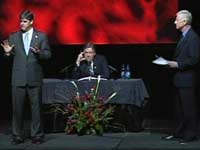
Salt Lake City Mayor Rocky Anderson publicly debates FOX News host Sean Hannity. The spectacle took place inside a chasm called Us versus Them. Produced in 2007 for This American Life; music: Rickie Lee Jones, “Nobody Knows My Name” from Sermon On Exposition Boulevard.
Politics can be frustrating. It can make you scream — which made one Presidential candidate became famous for. Here’s Howard Dean’s scream put to music (more mixes at James Lileks’ Bleatophony).
From the 1980s archives, we present this pre-teen perspective on our government’s founding document.
 Hearing Voices from NPR®
101 John Ono Lennon: A Memorial and Celebration
Host: Lynn Neary of NPR
Airs week of: 2010-10-06
“John Ono Lennon” (52:00 mp3):
Born: John Winston Lennon, October 9 1940
Died: John Ono Lennon, December 8 1980
On Saturday, October 9 2010, John Lennon would have turned 70 years old. This is our public-radio party, memorial and celebration:
Our host recalls how the Beatles changed everything, and John lead the charge; an audio essay, sprinked with live performances and 1963-64 Fan-Flub flexi-disk Christmas messages.
Lennon’s life, in own words, from his hundreds of interviews. Accompanied by music, outtakes, antics and poetics — singing, talking, and testifying about peace, family, and art.
Produced at KGLT-Bozeman with mix help from Colter Langan. Archive recordings are courtesy of Yoko Ono, the BBC, the CBC, Chicago’s Museum Of Broadcast Communications, Group W Productions, Rolling Stone Magazine, Apple, Capital, EMI, and Polydor Records.
WONSAPONATIME there was two Ballons called Jock and Yono. They were strictly in love-bound to happen in a million years. They were together man. Unfortunatimetable they both seemed to have previous experience — which kept calling them one way oranother (you know howitis). But they battled on against overwhelming oddites, includo some of there beast friends. Being in love they cloong even more together man — but some of the poisonessmonster of outrated buslodedshithrowers did stick slightly and tey occaasionaly had to resort to the drycleaners. Luckily this did not kill them and they werent banned from the olympic games. They lived hopefully every after, and who could blame them… —Lennon, Skywriting By Word of Mouth
Scanning the radio dial the night Lennon died. The Prof presents more audio of and info on this found-sound recording at WFMU.
Members of the generation jolted by Lennon’s death recall how they heard the news and how deeply this ex-Beatle’s life affected theirs (where were you when you heard?)
Voices: Scott MacNichol, Daniel Callis, Martin Goldsmith, Jane Blume, Mark Weber, Jim Palmer, John Scariano, Bonnie Renfro, Mary Oishi, Rob Raucci, and Emily Zambello. Produced at Cedar Creek Studios and KUNM-Albuquerque. PRX has a half-hour version of “The Day John Lennon Died.”

 Hearing Voices from NPR®
098 Working Class: For Labor Day
Host: Barrett Golding of Hearing Voices
Airs week of: 2011-08-31 (Originally: 2010-09-01)
“Working Class” (52:00 mp3):
Our Labor Day weekend welcome to the work week looks at what we do for a living:
Exercises for existential overworked, undervalued employees: a more realistic approach to yogic spiritual awareness for the cubically encased.
Produced by Rebecca Flowers, author of Nice to Come Home To
Pasquale Spensieri spends his days driving around Brooklyn looking for dull blades. When he rings the bell on his truck, the owners of upholstery shops, restaurants and pizza parlors come out with knives and scissors to sharpen. Pasquale’s father first started sharpening knives during the Depression, with a pedal-operated grinding machine strapped to his back. At that time, there were hundreds of door-to-door grinders in New York. Today, at the age of 71, Pasquale is one of the last. Produced by Joe Richman and Emily Botein (WNYC) for their series New York Works.
Since the 1880s, Mohawk Indian ironworkers have been known for their ability to work high steel. From the Empire State Building to the the World Trade Center, generations of Mohawks have helped shape New York City’s skyline. Each week, they commute to Manhattan from their reservation in Canada, framing the city’s skyscrapers and bridges. In September 2001, after the fall of the Trade Center Towers, the sons and nephews of these men returned to the site to dismantle what their elders had helped to build.
 Hearing Voices from NPR®
093 Lewis & Clark Trail II: The Columbia River
Host: Barrett Golding of Hearing Voices
Airs week of: 2010-06-23
“Lewis & Clark Trail II” (52:00 mp3):
Biking & Mic-ing the Lewis & Clark Trail; part 2 (of 2), from the Rocky Mountains to the Pacific Ocean:
Chief Mountain Hotshots, Nicole Meeso and Aldon Wells, Powell Campground ID — Getting ready for a day’s work in the Clearwater Forest with the Blackfeet wildland firefighters, known as some of the best in the world.
Sister Carol Ann and the Bendictine Sisters, St. Gertrude Monastery, Cottonwood ID — Land stewardship is a matter of faith in these sisters’ rural Catholic perspective. We walk thru the woods of the monastery; 800 acres which the sisters have had to learn how to manage.
Horace Axtell, Nez Perce leader, Lewiston ID — Nez Perce Bones: tribal elder, spiritual leader, and the last fluent speaker of the Nez Perce language. Co-author of A Little Bit of Wisdom: Conversations With a Nez Perce Elder.
Lois & Betty, Patterson Restaurant, Patterson WA — Sipping coffee and surveying farm life from the breakfast tables of a small town cafe.
Louis Butler and family, Walla Walla River WA — Four Generations Fishing: A retiree from Hanford Nuclear Reservation goes catfishing with his daughter, grand-daughter and great-grandsons.
Ken Karzmiski, Archeologist, Columbia Gorge Discovery Center, The Dalles WA — Looking for lost Lewis & Clark legacy, and the artifacts and languages of native cultures drowned by the Columbia River dams.
USCG Duty Surfman Kyle Betts, now Chief Boatswain’s Mate and Executive Petty Officer, Cape Disappointment U.S. Coast Guard Station WA — The USCG Search and Rescue team pulls boats and people out of treacherous West coast waters along the Columbia River bar, where the river meets the ocean: “the graveyard of the Pacific.”
An earlier pedal over the same route, from the Rocky Mountains, down the Columbia River to the Pacific Ocean, interviewing whoever crosses our path: wind surfers, church organists, forest service employees, and “we’ve been talking to as many loggers as we can, to try and find out if they don’t see bicyclists, or they just hate us.”
The first movement in From the Journals of Lewis and Clark, a symphonic work for orchestra and choir based on the expedition’s journals. Montana’s Great Falls Symphony commissioned University of Idaho music professor Dan Bukvitch as the composer. The text is President Jeffersons’s instructions to Captain Lewis in 1803.
Listen to Part One. And read more on the Lewis & Clark Trail and our bike trip.
 Hearing Voices from NPR®
092 Lewis & Clark Trail I: The Missouri River
Host: Barrett Golding of Hearing Voices
Airs week of: 2010-06-16
“Lewis & Clark Trail I” (52:00 mp3):
Biking & Mic-ing the Modern Lewis & Clark Trail; part one of two, up the Missouri River into the Rocky Mountains. Barrett Golding and Josef Verbanac, a radio producer and an English professor, a Jew and a Souix, bicycle from Missouri to Montana, enduring floods, war, worms, mud, and myriad Lewis & Clark festivals:
Prep: Cross-country preparations, then and now, from Penis syringes and Indian presents, to AAA and GPS. “Your observations are to be taken with great pains and accuracy, for others as well as yourself” –Jefferson’s Instructions to Lewis, 1803.
Flood: Missouri floodwaterss, a frog symphony, a million worms, bowfishing a beanfield, and in Marthasville MI little league it’s Lemke Trenching and Excavating vs. Miller Funeral Homes. Don Sherman, a retired Chrysler worker, who now volunteers his time taking care of the city park in the flood-prone landmark rural town — which, in Lewis & Clark’s time, was the last outpost of white society. And we go bow-fishing for in a bean field.
Rendezvous: Biking and mic-ing the Missouri River. Captain Lewis’ Aria, surveyor-stalking cougars, black powder bursts, cave wall Manitous, and Edens lost. Explorers express emotions and the Expedition breaks into song, in “Corps of Discovery: An Opera in Three Acts” produced by music professor Eric Dillner and the University of Missouri’s Show-Me Opera. Geographer James Harlan maps the Two Missouris, the Missouri Territory now and two centuries ago, using an 1815 Land Office survey and Clark’s field-notes. James Denny, Historic Interpreter, for Missouri’s Department of Natural Resources, points out where pictografs on a cliff were a landmark of the Lower Missouri, until the railroad blew ’em up; we tour through the tunnel of the ex-Manitous.
Wars: No Home on the Range, Chief Joseph’s Race Track, and Brothers Buddha and Brahma. Farrell Adkins, Campground Host at Arrow Rock MO sings the little known second verse of “Home on the Range.” Matt Nowak, Natural Resources Director at Fort Leavenworth Army Base KA describes this places part in the death and desctrution of the Nez Perce people.
Indian County: Daily pow-wows, casino economies, and Lewis’ birthday gloom. Neil Phillips, Penobscot tribal member and former canoe racer paddles from Maine to Montana, experiencing life on the river, a little-seen view of America. Joe Verbancec Sr. tours us thru the Standing Rock reservation.
The Strenuous Life: Bruce Kaye, Chief Naturalist at Theodore Roosevelt National Park recounts Teddy Roosevelt’s time in North Dakota. His ideas about conservation developed in the badlands, then get expressed in the acts of the President of the United States and the start of the National Park system.
Re-enaction: At Coal Banks Landing, on Missouri River “Breaks” in Montana, we encounters the re-reactors, traveling up-river using the boats, clothes, food, guns and knifes of the Lewis & Clark era.
Camp: Lewis and Clark made 600 campsites on their expedition from St. Louis to the Pacific and back. So far, the exact location of only one has been identified. For 13 years, archaeologist Ken Karsmizki has been digging at Lower Portage camp of the Great Falls, on the Missouri River in Central Montana, and finding fire pits, butchered bones, wooden stakes and other artifacts, all dating to Lewis and Clark’s time.
Orchestration: “From the Journals of Lewis and Clark” is a symphonic work for orchestra and choir based on the expedition’s journals. Montana’s Great Falls Symphony commissioned University of Idaho music professor Daniel Bukvich as the composer, whose job was to make Art imitate History.
Listen to Part Two. And read more on the Lewis & Clark Trail and our bike trip.
 A 2-article rundown on distributing pubradio programs, and the $s involved, is published in AIRblast: Part I and Part II. Features lotsa intervus with producers and program directors. Evals who’s buying what for how long and how much. And it’s loaded w/ how-tos, data, and personal perspectives on PRSS and PRX.
Producer Nancy Solomon recently posted her first piece on PRX: “The interface works great; I was pleasantly surprised how easy it was. Their help desk was super helpful and easy to get a hold of. I like the way the page looks; I like the way it’s laid out and the flexibility the format gives you to put both segments and whole pieces up. I was also amazed and pleased at how accessible John Barth was to talk about how best to promote the show.”
So, if a radio piece falls in the PRX forest, will a PD hear the sound? Not always. “Producers putting stuff on PRX is like thousands of crack addicts selling their junk on street corners,” says Charles Lane, producer, WHSU News reporter, and former PRX election curator. “We’re just curious street exhibits with sad eyes hoping programmers might spot our wares, as they race to wherever they’re going.”
But what producers really want to know is: How’s it work? And: How rich will I get?

 Hearing Voices from NPR®
085 Protest: At the National Mall & Town Halls
Host: Barrett Golding of Hearing Voices
Airs week of: 2011-03-23 (Originally: 2010-02-24)
“Protest” (52:00 mp3):
Protest may be new to some parts of the world, but in America, complaining about the government is a national pastime. We hear protest music and mashups; we go to protest marches, from Vietnam War era actions on the National Mall, to modern-day Tea Parties and Town Halls:
Protest used to be mainly for the young and left-leaning, but recently older right-wingers have joined the party — the Tea Party. When Congressmen went home in 2009, this is what they heard from constituents. Music: Jeff Arntsen, mix: Robin Wise, audio: excerpted from YouTube videos.
A sound collage of protests and protest music over the past 40 years
The popular Burmese rock band Iron Cross is using music to challenge the nation’s infamously repressive regime. In the great tradition of rock and roll, Iron Cross is taking on Burma’s military government with song.

 Hearing Voices from NPR®
084 Place Your Bets: What Happens in Vegas
Host: Alex Chadwick of Conservation Sound
Airs week of: 2011-01-26 (Originally: 2010-02-17)
“Place Your Bets” (52:00 mp3):
We play keno, cards and craps in Sin City:
Up all night in America’s gambling Mecca: Vegas, baby.
A classical composition, in three parts, for strings, winds, and an interview with Tom Martinet, who trained to be a priest, but, instead, started working Nevada dice tables. Premiered 1997 in Vegas, performed by Sierra Wind Quintet. Re-released on PKB’s 2006 Larkin Gifford’s Harmonica.
An NPR hosts pits his wits against the regulars at a downtown small-town casino. Guess who wins. Produced by Carolyn Jensen; sound engineer by Michael Schweppe.
An excerpt from Joe’s hour “Zen” in his series The Other Side. What happened in Vegas… definitely didn’t stay in Vegas. Getting on the wrong side of Sin City’s collection crew.
Jazz bassist Kelly Roberti (David Murray Quintet) lost his bass to the keno machines. He kicked the habit; the scars remain, but the bass is back. Kelly was a 2010 Governor’s Arts Awards winner.
A radio drama written for Ridley’s 2001 LA Series on NPR Morning Edition. Performers are Bob Wisdom, Yang Chee, and Jim Wallace (script).
Above photo of the Las Vegas sign by Kcferret, June 2005.


